 Ormond Beach Golf Cart Repair
Mobile Golf Cart Repair in Ormond Beach
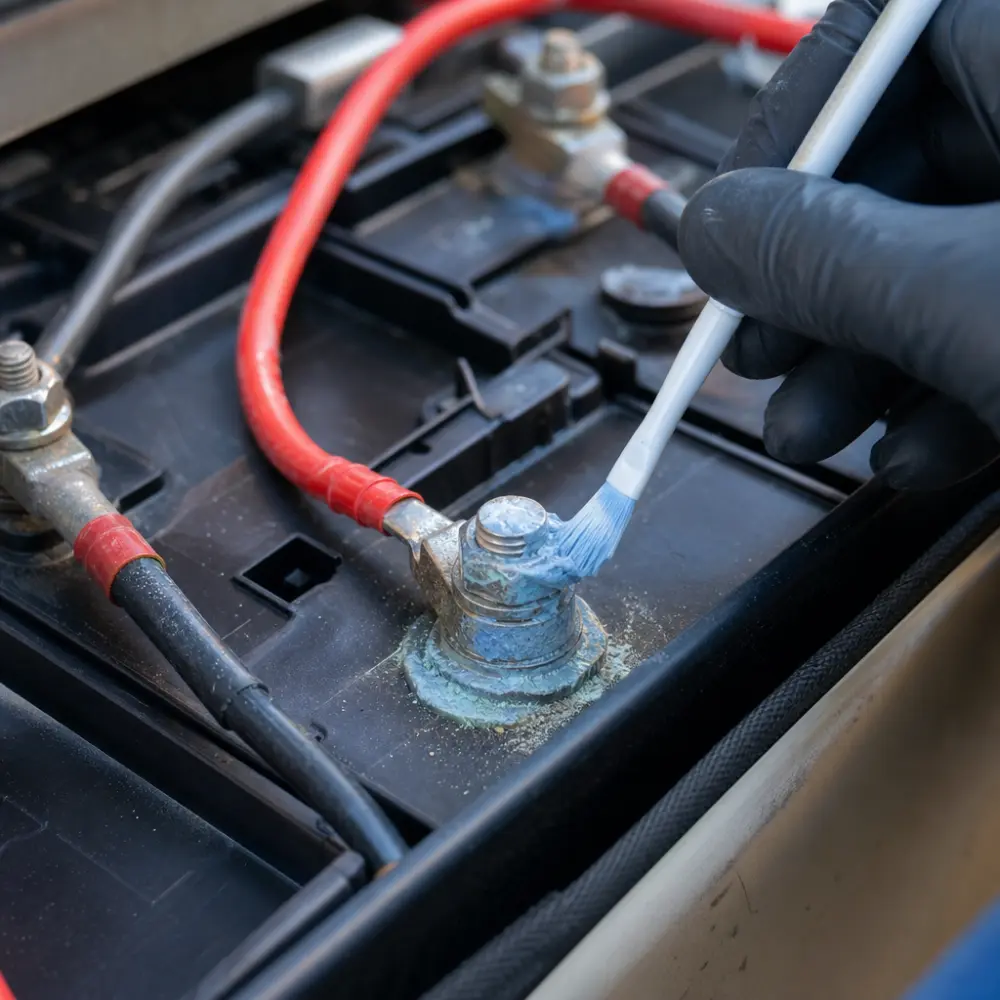
Our techs repair golf carts where they are parked: in your driveway, your garage, or your community’s cart barn, anywhere from Ormond Beach and Ormond-by-the-Sea down to Port Orange and up to Palm Coast. The $50 to $100 service call covers a full on-site diagnosis and is usually applied toward the repair you approve, and because the truck carries the parts that fail most often, a lot of carts are running again before we leave. You get readings first, then a flat quote, then the work.
Why we bring the shop to you
A golf cart that will not move is a heavy, awkward thing to get anywhere. Loading it means a trailer, a ramp, a tow vehicle, and usually a second person, and a dead cart cannot drive itself up the ramp. Then it sits at a shop for days. For a lot of our customers, especially in the golf communities and the beachside condos, the cart is also how they get around, so a week without it is a real problem. Fixing it on the spot skips all of that. It also lets the tech see where the cart lives, and that matters here: a cart kept a few blocks off the Atlantic wears differently from one kept in a closed garage out by Plantation Bay.
What to tell us when you book
The more we know before the truck rolls, the more likely the right part is already on board.
- Make and rough age. Club Car, E-Z-GO, Yamaha, ICON, Evolution, or something else. The serial plate is usually under the seat or on the frame near the passenger side.
- Gas or electric. If electric, how many batteries you can count, and whether they have caps you can open (flooded) or are sealed or lithium.
- What it is doing. “Clicks but won’t go,” “dies halfway home,” “charger light blinks and never finishes,” “brakes squeal” all point us at different parts.
- When it started. Right after a storm, right after you got back from up north, or right after a battery change are all useful clues.
- Two photos. One of the battery compartment with the seat up and one of the charger’s lights while plugged in.
Symptom, likely cause, and what we bring
| What you see | Usual suspects | What the visit looks like |
|---|---|---|
| Key on, pedal down, nothing happens | Solenoid, cable end, throttle sensor, controller | Test the pack first, then the solenoid circuit; a solenoid is $100 to $250 and is often on the truck. See motor and controller repair. |
| Charger never shuts off, or will not start | Charge port pins, receptacle wiring, charger, one weak battery | Port and charger output tests before anyone talks about a new pack. Port repairs run $100 to $300. See charger repair. |
| Slow, short range, fades on the bridge over the Halifax | One bad battery, corroded cables, a worn-out pack | Per-battery load test and a voltage-drop check; pack pricing is on the battery replacement page. |
| Squeal, grind, pull, or creeps when parked | Brake shoes, drums, cables, a seized cam | Adjustment about $75, shoes and drums $100 to $250, full brake overhaul $200 to $400. See brakes and tires. |
| Flat, cracked, or cupped tire | Dry rot, UV, low pressure | Most sizes $75 to $150 each mounted, often the same visit. |
| Headlight, signal, or horn out | Bulb, switch, ground corroded by salt air | Repaired on site and covered in the yearly tune-up. |
On lighting: Florida law requires headlights, brake lights, turn signals, and a windshield on a golf cart driven after sunset (F.S. 316.212), and a low-speed vehicle has its own required-equipment list (F.S. 316.2122). If you are not sure which rules apply to your cart, ask us and check with the city or your community, because local rules on where carts can go differ.
How our techs work through a dead cart
Guessing at golf cart faults is how owners end up with a new battery pack and the same problem. Our techs test in an order that rules out the cheap causes before the expensive ones:
- Look before touching anything. Terminal and cable condition, the date codes stamped on the batteries, water level in flooded cells, and how the charger’s lights behave.
- Read the whole pack, then every battery. A pack can read close to normal while one battery in it is far below the rest. That is a single-battery fix on a young pack, not a full replacement.
- Put each battery under load. Resting voltage can look fine on a battery that falls apart the moment the motor asks for current.
- Check specific gravity on flooded batteries. A hydrometer reading cell by cell shows a sulfated or shorted cell that a voltmeter misses. Trojan publishes 1.277 or higher at 80 degrees as a full charge.
- Measure voltage drop on the main cables while driving current. A good cable loses next to nothing. A green, salt-eaten lug can throw away a volt or more, and at golf cart amperage that feels exactly like a weak pack.
- Test the charger at its plug and at the cart’s receptacle.
- Move to the solenoid, throttle input, and controller only once the pack has proven healthy.
Only after that do you get a number, and it is a flat number for the job, not an hourly meter.
Beachside carts and mainland carts
Ormond Beach splits cleanly at the Halifax River, and the repair calls split with it.
East of the river, on the beachside off Granada Boulevard and up A1A through Ormond-by-the-Sea, carts live with salt air every day. The calls we see most there are corrosion calls: green terminals, a charge port that has started to burn, a lighting ground that quit, brake hardware that will not release. Many of those homes are seasonal, so the cart also sits for long stretches.
West of the river, in Ormond Lakes, Tomoka Oaks, Plantation Bay, Halifax Plantation, and Hunter’s Ridge, carts see less salt and more miles. Heat is the bigger enemy there, cooking water out of flooded cells, and the calls lean toward worn packs, brakes, and tires on carts used as everyday transport.
We also cover Holly Hill, Daytona Beach, Port Orange, and Palm Coast. Many of these communities are gated, so give us the gate procedure or a code when you book and our tech will not be stuck at the entrance.
The cart that sat, and the cart after a storm
Back from a summer away. A cart left in a hot garage from spring to fall does not hold still. The pack slowly discharges, terminals turn green, brake cams stiffen, and the charge port can oxidize. How it was parked decides most of the outcome: a cart left fully charged on a maintainer usually comes back fine, while a cart left half charged and unplugged often has batteries that will not recover. We price the homecoming check as a tune-up, and catching a pack early is often what saves it. The symptom page golf cart sat all summer and won’t start walks through what you can check yourself first.
Hurricane season. Volusia County has had real flooding from tropical systems, including Ian in 2022 and the storms of 2024. When a storm is in the forecast, fix any charging problem first and get the cart fully charged before the power can go out. After the storm, the common calls are packs that went flat during a long outage, salt water in the battery compartment, and chargers hit by a surge when power came back. If the cart sat in water, leave it unplugged until it has been tested.
Warranty work and straight answers
We are an independent golf cart repair company, not a factory dealer or warranty center for Club Car, E-Z-GO, Yamaha, ICON, Evolution, or anyone else. If your cart is still under factory warranty, start with the dealer who sold it so you do not lose that coverage. For everything else, our ranges are published on the pricing page, the quote you get in the driveway is flat, and if the cart is not worth the repair we say so.
Get a tech scheduled
Send us the make, gas or electric, the battery count, what the cart is doing, and a couple of photos through the quote form or by phone. We will come back with a visit window that fits the week’s schedule and an idea of what the fix is likely to be.
Frequently Asked Questions
Which repairs get finished in the driveway, and which need a second trip?
Most of them finish on the first visit: a dead solenoid, a corroded cable set, a burned charge port, brake shoes, a tire, a light that quit. What usually needs a return trip is a part that is specific to your cart and not worth stocking, such as a controller for an older model or a motor that has to go out for a rebuild. We tell you which kind of job it is before you approve anything.
Can you come out to the beachside or up to Palm Coast?
Yes. Ormond Beach on both sides of the Halifax is the middle of our area, and Ormond-by-the-Sea, Holly Hill, Daytona Beach, Port Orange, and Palm Coast are all on the route. Every quote comes with a visit window, and the outer towns can take a little longer to slot in. If the cart is how you get around your community, say so when you book.
Does someone have to be there while our tech works?
For the first look, we would rather you were, so you can see the readings and hear the explanation before you say yes. Once you have approved a flat quote by phone or from photos, the work can go ahead with the cart left in an open garage or cart barn.
Will you tell me if the cart is not worth fixing?
Yes. When a cart has a rusted frame, a tired controller, and a pack at the end of its life all at once, the repair bill can pass what the cart is worth. You pay the service call, you get the readings, and you get our honest view on whether the money is better spent on a different cart.